Vessel Sanctions Screening

The vessel passed your screening.
It shouldn't have.

Strelux resolves the vessel to its IMO, then checks every name it has ever sailed under against OFAC, EU, UN, UK, and Swiss SECO.

Vessel sanctions screening that resolves every prior name to its IMO number.
Aerial view of an oil tanker at sea

Inside

  1. 01Hero
  2. 02Problem
  3. 03Audience
  4. 04Method
  5. 05Case Files
  6. 06Send the IMO
  7. 07Where Strelux fits
  8. 08Pricing
  9. 09Sources
  10. 10Trust
  11. 11FAQ
  12. 12Start a trial
Why Clean Results Fail

Why “clean” vessel screening results fail compliance.


The rename

A vessel gets sanctioned under one name. Eight weeks later it sails under a new one. Your screening tool checks the new name against today's lists and returns clean. The hull, the crew, the ownership chain, the designation. All still there. You cleared it anyway.

Failure Mode

The stale name field

The sanctions list was updated. The vessel's name was not. Your analyst searches the current name in good faith and finds nothing. The OFAC entry is sitting there under the prior name, one record over, and nobody is looking at it.

Failure Mode

Container ship deck view at sea
Fig. 02 — A hull in transit. Names change. Hulls do not.

The split jurisdiction

One hull. Three sanctioning authorities. Two programs. A flag state now listed as "Unknown." Your single-list check returns a result that is technically accurate and operationally useless. The analyst signs off. The exposure is real.

Failure Mode

Audience

Who uses Strelux for maritime compliance.

Built for the people who sign off on the vessel.


Commodity Trading

A compliance analyst clearing charters on a deadline.

A compliance analyst at a commodity trading firm clearing charters on a deadline.

The charter leaves at 06:00. The screening has to be defensible by 05:45.

Banking

A sanctions officer screening vessel-backed trade finance.

A sanctions officer at a European bank screening vessel-backed trade finance deals.

Every letter of credit is a vessel. Every vessel is a file we have to sign.

Marine Insurance

An underwriter binding hull and cargo on sensitive routes.

An underwriter at a marine insurer binding hull and cargo cover on routes that touch sanctioned regions.

We bind the cover, then we learn what we just covered. That is the wrong order.

Method

How Strelux runs an IMO-based sanctions check.

Three steps. One evidence file.

Input

Enter an IMO number or a vessel name. If you have a name, Strelux resolves it to an IMO before it does anything else.


Resolution

Strelux pulls every prior name, every prior flag, every registered owner and manager. Then it runs the full history against OFAC, EU, UN, UK, and Swiss SECO.


Output

You get a single evidence file. Every hit, every source, every date, every URL. Paste it into your case file and close the ticket.

Aerial top-down view of a container yard
Fig. 04 — Port stack, top-down. One IMO per hull. One hull per file.
Case Files

Proof that name-based screening fails.

Three vessels. Three failures. All three were sailing this quarter.

FINEX — reference imagery
IMO 9250397
FINEX
Failure

Failure modeRename evasion after sanctions designation.

Current status: underway using engine, reported destination Rotterdam (NL RTM), 9.8 kn at course 355° As of 2026-04-22 13:07 UTC

What a name check on “FINEX” returns: clean.


What name checks return
  • Current name FINEX: no matches on OFAC SDN, EU consolidated list, UK OFSI list.
  • No flag-state sanctions association under the current identifier.
  • Screening closes green. Analyst moves on.
What Strelux returns
  • Prior name FITBURG, seized by Finnish authorities on 31 December 2025 on suspicion of cutting the Helsinki–Tallinn NATO undersea telecommunications cable
  • OpenSanctions flagged the vessel as an entity of interest for maritime detention in June 2025, six months before the seizure
  • Linked to Russian Maritime Register of Shipping, a sanctioned entity

Sources

OpenSanctions, Finnish Border Guard incident record, Finnish Customs cargo finding. Every link cited in the evidence file.

RICH STARRY — reference imagery
IMO 9773301
RICH STARRY
Failure

Failure modeOFAC entry under prior name; current name returns clean.

Current status: at anchor near the Strait of Hormuz, 0.1 kn at course 194°, reported destination: for order As of 2026-04-23 13:10 local (UTC+3:30)

What a name check on “RICH STARRY” returns: clean.


What name checks return
  • Current name RICH STARRY: no match on OFAC SDN under that string.
  • Name-only search ignores prior identity on the same hull.
  • Screening closes green. Exposure remains.
What Strelux returns
  • Prior names on same hull per Equasis: WEALTHY STAR (since 2024-08-01), FULL STAR (since 2015-10-01)
  • OFAC SDN list hit under program IRAN-EO13846
  • Continuity of IMO confirms same hull

Sources

OFAC SDN list, Equasis name history. Cited in the evidence file.

EVENTIN — reference imagery
IMO 9308065
EVENTIN
Failure

Failure modeTwo sanctioning regimes, two programs, one hull, now reflagged.

Current status: at anchor, reported destination TBA, 0 kn at course 67° (true heading 98°), currently flying the German flag As of 2026-04-23 10:48 local (UTC+1)

What a name check on “EVENTIN” returns: a partial hit or a contradiction, depending on which list you picked.


What name checks return
  • One list shows a partial match. Another shows nothing.
  • The contradiction is never resolved inside the screening tool.
  • The analyst gets to pick which answer to believe.
What Strelux returns
  • OFAC program IRAN-EO13902 designation
  • EU Russian crude cargo program association
  • Flag history: Panama → Unknown → currently German-flagged — the OFAC and EU designations still attach to the same IMO

Sources

OFAC, EU sanctions registry. Cited in the evidence file.

Send a challenge

Send us an IMO we've never seen.

We will run the full evidence chain and send it back inside one business day. Available for compliance teams, banks, insurers, and traders evaluating Strelux.

Fit

Where Strelux fits (and where it doesn't).

Strelux does one job. Here is where it fits, and where to use something else.

Use Strelux

If you need a defensible answer to "did you actually check this vessel's full history"

That is the question Strelux was built for. Current name, prior names, every flag, every owner, every sanctions program, every primary source. In one file. Auditable.


Don't use Strelux

If you need live AIS tracking, dark activity detection, or ship-to-ship transfer monitoring

Use a Maritime Domain Awareness platform. They process hundreds of millions of AIS messages a day and that is what they are for. Strelux does not do this and does not claim to. Once a vessel goes dark, though, you still need to know what it actually is when it surfaces. That is a different question.

Use a Maritime Domain Awareness platform instead.

If you need behavioral risk scores or predictive designation models

Use a predictive analytics platform. They will tell you what a vessel is likely to become. Strelux tells you what a vessel already is, with a source URL next to every claim. Different job. Often a complementary one.

Use a predictive analytics platform instead.

Pricing

Priced for a compliance team, not a procurement committee.

Maritime sanctions tools are quoted annually. Strelux follows that standard. What's different is what's included. Full evidence files, every primary source cited, no per-screening surcharges, no gotcha pricing on data volume. One scope, one number, renews annually.

Engagements typically start in the low five figures annually. Strelux is built for teams with meaningful vessel exposure.

Tier 1

Screening

For teams clearing individual vessels on a deadline.


  • IMO-keyed vessel identity resolution
  • Full evidence file exports (PDF and JSON)
  • OFAC, EU, UN, UK OFSI, Swiss SECO coverage
  • Complete name, flag, and ownership history
  • Standard email support

Contact sales

Tier 2

Intelligence

For teams assessing ongoing portfolio risk.


Everything in Screening, plus:

  • Ongoing monitoring of vessels in your portfolio
  • Ownership graph traversal and change alerts
  • API access
  • Priority support

Contact sales

Tier 3

Enterprise

For institutions managing category-level sanctions exposure.


Everything in Intelligence, plus:

  • Custom integrations and data feeds
  • Dedicated analyst support
  • SOC2 Type II controls, custom DPA, contractual flexibility
  • SLA commitments
  • Customer-managed encryption keys
  • Dedicated tenant deployment in the customer's preferred GCP region

Contact sales
Sources
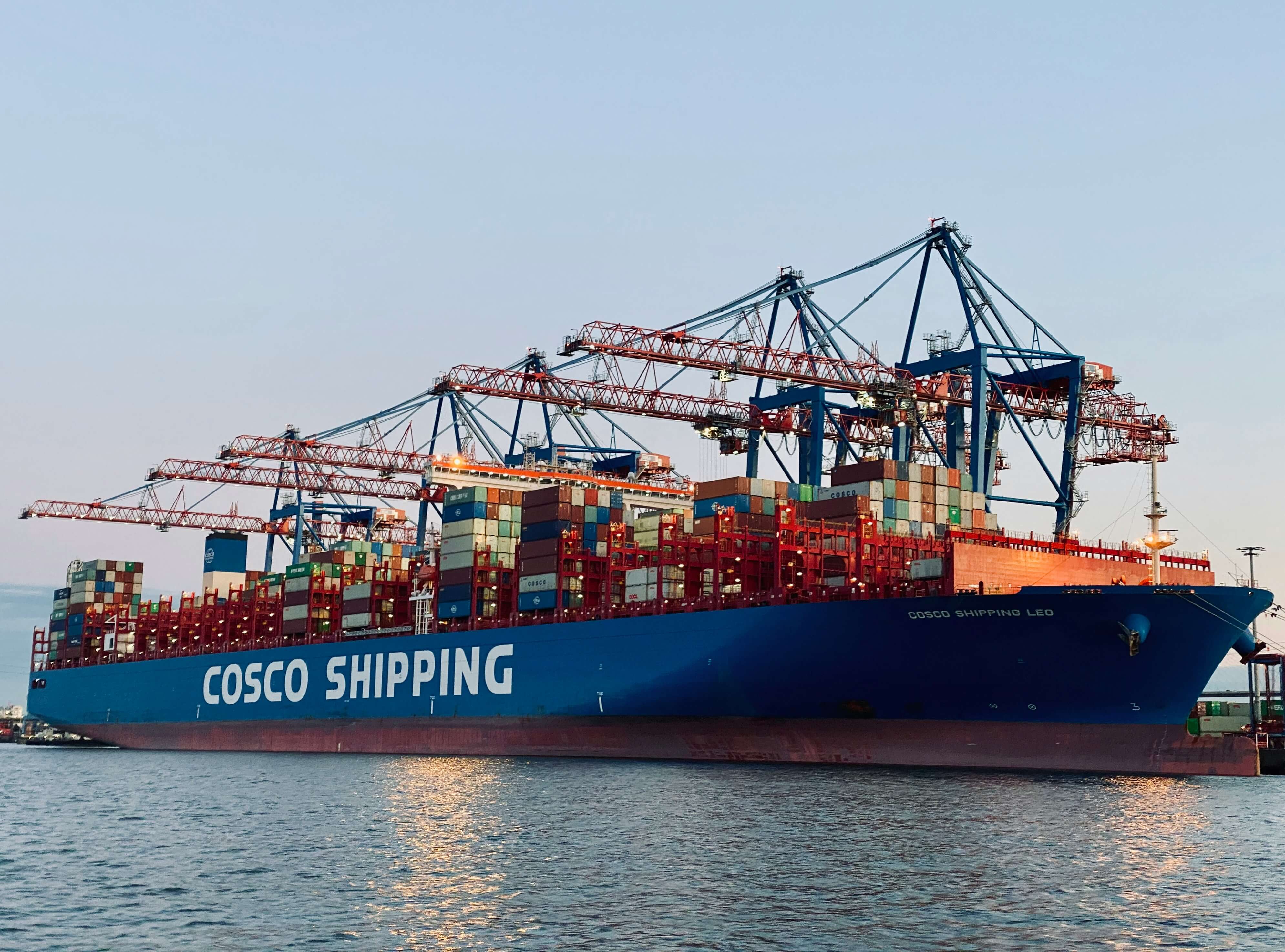
Container ships loading at port
Primary sources — every claim cited back to its registry of origin.

Sanctions lists and vessel registries Strelux checks.

Every claim in an evidence file is traceable. Here is what we read.

Lists we check


Registries we read

We would rather tell you this up front than sell you around it.

What we do not have


  • Live AIS position data
  • Satellite imagery
  • Beneficial ownership for Chinese and Russian entities. The data is not available in public or licensed sources we can defend in an audit.
  • Behavioral risk scores
Data Handling

How Strelux handles your data.

Hosting and residency
Google Cloud, region europe-west3 (Frankfurt). All customer data is processed and stored within the European Economic Area.
Encryption
TLS 1.3 in transit. AES-256 at rest, including database storage and backups. Customer-managed encryption keys available on Enterprise.
Access controls
Production access is restricted to named personnel, requires multi-factor authentication, and is logged. Access reviews are performed quarterly. Customer data is accessed only by support personnel working on an active customer ticket, with all access logged.
Audit logs
Every screening action is logged with user, timestamp, inputs, and the returned evidence file. Logs are available to customer administrators on request. API-level audit log access is included on Intelligence and Enterprise tiers.
Data retention
Evidence files and screening history are retained for the active contract term. On termination, customers choose between secure deletion within 30 days or extended retention for regulatory archival up to 7 years, contracted separately. Operational logs are retained for 12 months.
Data Processing Agreement
A GDPR-compliant DPA is provided to all customers during contract negotiation. Standard Contractual Clauses are executed where applicable. Available for review before signing.
Sub-processors
Current list at strelux.com/sub-processors. Customers receive 30 days notice before sub-processor changes.
Incident response
Security incidents affecting customer data are disclosed to affected customers within 72 hours of confirmed discovery, with preliminary details and continuing updates until resolution.
Compliance posture
Strelux operates to SOC2 Type II control principles. Formal SOC2 Type I observation period begins Q1 2027. ISO 27001 certification is on the 2027 roadmap.

Frequently Asked

Frequently asked questions about vessel sanctions screening.

How often is the data refreshed?

Sanctions lists are refreshed every 24 hours. Vessel registry and flag history are refreshed weekly. Every evidence file includes the exact timestamp of the data that produced it.

Is Strelux real-time?

No. That is deliberate. Strelux is a batch resolution platform. If you need continuous monitoring with push alerts the moment a vessel enters a sanctioned port, that is a different product category. We will name the tool.

Can I use Strelux for audit evidence?

Yes. The evidence file includes a primary-source URL for every flagged item, with the date the source was checked. That is the product.

Do you integrate with our case management tool?

Yes, on the Intelligence and Enterprise tiers. The API returns the same evidence file format as the UI, PDF and JSON, so the integration into your case management workflow is direct. Screening tier customers get the evidence file as a PDF and JSON download.

What jurisdictions do you support?

Sanctions lists from the United States, European Union, United Nations, United Kingdom, and Switzerland. Vessel registries covered are listed above.

How does Strelux handle our data?

Production runs on Google Cloud Frankfurt. All data stays in the European Economic Area. TLS 1.3 in transit, AES-256 at rest. Full details, including our DPA, sub-processor list, and incident response policy, are in the data handling section above.

Do you do company-level sanctions screening?

No. Strelux is vessel-first. If you need to screen a counterparty company against sanctions, use a KYB tool. If the counterparty is a vessel owner or manager linked through an IMO, we will surface it.

How does this compare to Seasearcher, PurpleTRAC or Windward?

Different jobs. Those platforms monitor fleets continuously and score behavior. Strelux produces a sourced, defensible answer on a single vessel when you need to clear a deal today. Many teams use both.

How long to onboard?

Onboarding takes 2 to 4 weeks. That covers contract review, DPA execution, data access provisioning, and analyst training. We've seen this run faster when procurement is pre-approved on the customer side.

What if my analyst doesn't have an IMO, just a name?

Strelux resolves names to IMOs as Step 1. Submit the name; the resolution and the screen happen in the same call.

Do you offer a free trial?

No. Maritime sanctions screening is contractual by nature. Audit evidence files need a signed contract behind them. We do offer paid pilot engagements for qualifying teams, scoped to a defined evaluation period with clear success criteria.

One last ask

Pick a vessel from last quarter. We'll send back the evidence file your current tool didn't.

Send us a vessel your current tool already cleared. We will run the full evidence chain and send it back inside one business day. Compliance teams, banks, insurers, traders.